
creating a culture of empowerment & respect
|
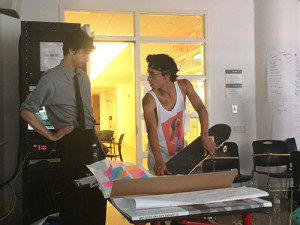
The program was designed to value student voice and redefine the typical power dynamic in student-teacher relationships. Projects were built around an appreciation for student knowledge and life experience. Instructors determined learning goals and skill-sets, but students were given autonomy to decide how to solve problems and use class time.
“…The adults here treat you like equals, unlike school…it’s a new experience for me.” |
Practices for Nurturing Youth Voice:
- Teachers as Facilitators. Teachers were positioned as project managers and facilitators to help each student to feel confident.
- Supporting Autonomy. Students took on roles as project managers for their work groups. Teachers remained on hand to offer support when needed, but students were allowed freedom and control within a structured environment.
- Fostering Mentorship. Former students were hired as interns tasked with documenting the progress of, and inquiring about the impact of the program. In many cases students led the conversation about what impact looked like for them.
- Cultivating Freedom. We designed projects to have flexible paths towards goals, self-directed learning, and many different ways to solve a problem or execute a project. Students were encouraged to take their time and enjoy the process.
- Valuing Student Expertise. Teachers were not the only experts. Students’ expertise was acknowledged and utilized in the learning and design process.
- Flexibility with Structure. We established group norms and expectations through dialogue with students at the beginning of the course so that common behavioral expectations were defined, but we were willing to adjust norms where needed.